Friday, September 30, 2011

Log 4

ED
Log Date: September 30, 2011
Marking Period 1
Green Pier

Work Started
  • Developmental Work-Started drawings before CAD drawings
  • Background Information-edited and corrected previous work. I added pictures and completed better by the rubric.
  • Fix previous work done in the summer-double checking rubrics, re-doing anything necessary, adding pictures
  • Research-researching anything else that I may need information about
Work Completed
  • Background Information-added necessary pictures and information
Reminders
  • Keep mentors updated-Always email them when making any big changes.
  • Remember to check blog for comments from teachers.
  • Make sure to follow rubrics exactly to ensure the best grade possible.
  • Stay on task and current with calendar of assignments

Wednesday, September 28, 2011

Log 3

ED
Log Date: September 28, 2011
Marking Period 1
Green Pier

Work Started
  • Developmental Work-Started drawings before CAD drawings
  • Background Information-edited and corrected previous work. I added pictures and completed better by the rubric.
Work Completed
  • Background Information-added necessary pictures and information
Reminders
  • Keep mentors updated-Always email them when making any big changes.
  • Remember to check blog for comments from teachers.
  • Make sure to follow rubrics exactly to ensure the best grade possible.

Friday, September 23, 2011

Log 2

ED
Log Date: September 23, 2011
Marking Period 1
Green Pier

Work Started
•    Developmental Work-Started drawings before CAD drawings

Work Completed
•    Rationale-Decision on which promenade and landscaping layout to use and why.
•    Research on plants to use-Decided which plants to use when replacing the old

Reminders
•    Keep mentors updated-Always email them when making any big changes.
•    Remember to check blog for comments from teachers.

Thursday, September 22, 2011

Rationale

            The Green Pier project consists of three main parts-the architecture, the landscaping, and the dock building.  Each group member controls one part of the project.  For my section, I am focusing on the landscaping and civil engineering.  I am designing everything up to the bulkhead, including a promenade which will connect to two piers-one for docking boats, and one for fishing.
            The first part of the project that I designed was the site.  My first alternate solution barely changed the landscape of the site.  I decided to survey the land and close to the coast because there is a huge drop down to the bay.  Then I decided to pull out existing plants and replace them with new ones.  This plan is a good idea because it keeps everything natural looking and calls for minimal construction.  It leaves plenty of room for the banquets that are frequently held in the chapel and in tents set up on the land next to it.  One downfall to this plan is that it requires very little change, so there is very little expression of my style to the land.  Then again, I would be deciding which plants to use when I replace the existing ones.

            My second alternate solution adds two picnic areas in the open land.  I will survey the land and replant existing shrubbery.  The picnic areas are covered with a concrete floor and have two or three metal picnic tables underneath the covered area.  This will attract more fishermen and visitors to the park because they could sit and have a nice lunch under the covering.  It would get them out of the hot, summer sun and allow them to sit down and be comfortable.  A downfall is that by placing these areas, I am taking away from the area that the company uses to hold weddings, and if there were a wedding, the tables would get in the way and not look the greatest.  The areas would take away from the natural beauty of the chapel and the bay.
            My third alternate solution includes more parking for the chapel.  I decided to extend parking about eighty feet in front of the chapel to allow for more visitors by car.  I would survey and fill the land by the bay, and replace the overgrown and dead plants.  I also include a picnic area.  The picnic area is about sixty feet by eighty feet and has a cover and cement floor.  There will be four to five tables where people could get out of the sun or enjoy food.  Positives of this design were the extended parking lot so travelers could have more opportunities to park closer, as well as the bigger picnic area to allow for larger groups.  Downfalls were that we weren’t sure if we wanted more people to park because it would cause more traffic.  We also weren’t sure if we wanted a bigger picnic area, especially if it interfered with weddings and events held at the chapel.

            My final alternate solution included a picnic area with no covering, as well as a gazebo.  The land near the bay needs to be surveyed, and the plants need to be replaced.  The picnic area wouldn’t have been covered or have a floor.  There would just be picnic tables in an area to allow people to rest after a long day of fishing.  The gazebo would be there for the shade, and may have a few chairs to relax in and look out at the bay.
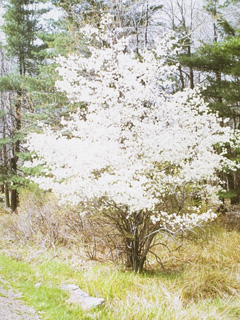
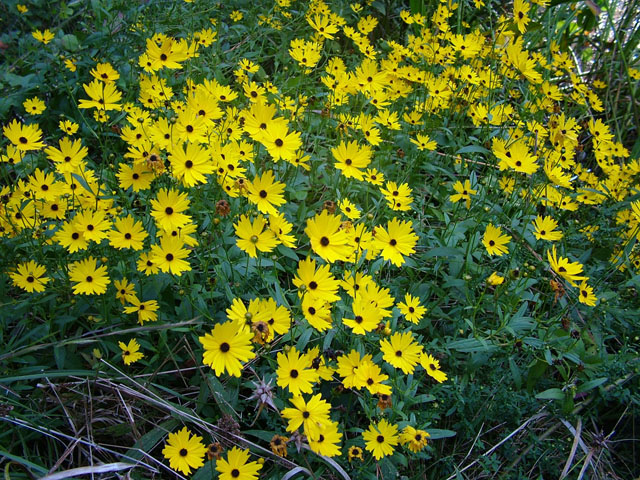
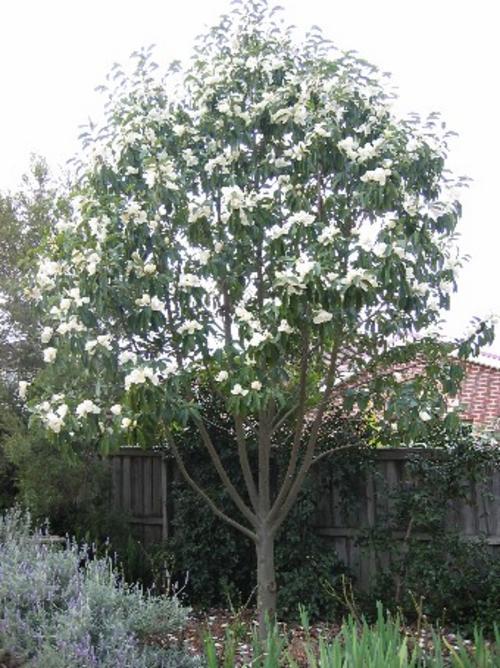
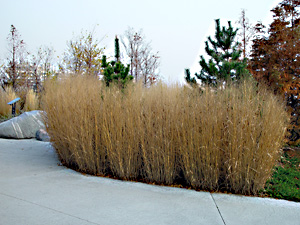
            I decided to choose my first alternate solution.  During class, we went out to look at our site and saw all of the tents set up outside of the chapel, and they took up a ton of space.  I don’t want to build a picnic area when people currently use the field next to the Chapel frequently for weddings and other big events.  I also didn’t decide to extend the parking lot because there is no need to.  The existing parking lot is in good condition, and it has just enough spots.  If we made more room, people wouldn’t only use that parking for our area, so it could cause problems.  The land needs to be surveyed and filled, and the plants need to be completely replanted.  I am using Smilax rotundifolia, Amelanchier canadensis, and Rhus glabra for trees; Helianthus angustifolius, Helianthus debilis, Coreopsis gladiata, Cornus florida, and Magnolia grandiflora for flowers; and Ammophila breviligulata, Panicum amarum, Panicum virgatum for grasses. 

            The next part of my project is to design a promenade to link the piers and the land.  The two piers would attach to this promenade which would lead to the ground where people could relax and look at the scenery.  My first alternate solution is two hundred feet by twenty feet.  It has a bench every twenty feet along the land side, and includes railings to prevent people from falling over the edge into the water.  It has entrances to the piers thirty five feet in on each side, and one entrance to the land.  This pomenade lacks an expression of creativity, and it also is too long.
            My second alternate solution is one hundred sixty feet long by twenty feet wide.  Benches are located every twenty five feet, and railings are all around the promenade.  Entrance to the piers is located five feet in from each end, and there is one entrance to the land.  This promenade also lacks creativity, but the length works much better.  The one entrance leaves it very open to people coming on and off the pier, and opens it up to the park area very well. 
            My third alternate solution is one hundred eighty feet by twenty five feet.  It has benches located randomly along the land facing the ocean, as well as binoculars you could pay to use to look into Atlantic Highlands and Highlands.  Piers connect to the promenade twenty feet in, and railings are located all along the edges.  This would work very well because of the additional binoculars and two entrances to the park.  The pier is wider to allow for more people, but it is longer than it should have been.
            My final alternate solution for the promenade is two hundred feet by twenty five feet.  It has benches every twenty feet along the railings with one main entrance and two smaller entrances on the ends.  The pier connections are thirty feet from each end, and there are also binoculars on the pier.  This pier is a little too long, and there is too much empty space.
            After discussing with my partner about the piers, I decided that alternate solution two would be the best.  It has just enough to make everything look put together, but it doesn’t take away from the natural appearance of anything.  The entire idea is to be environmentally friendly, and this promenade design would do it best.  It is the shortest of the four, allowing it to work well in our given space, and the entrances to the piers work the best with my partner’s design.  The benches are to be made of the left over wood from the chapel to preserve everything and tie it all together.  This promenade was the best fit for our idea.


Specification Checks


Spec Check Landscape Design


Spec Check Promenade Design


Tuesday, September 20, 2011

Log 1

ED
Log Date: September 20, 2011
Marking Period 1
Green Pier

Work Started
  • Research for plants
    • Organize and draw what plants I want to plant and where they will go.  Make a site plan of those plants.  Check to make sure they are native to Sandy Hook.  Plants must be aesthetically appealing.
  • Rationale
    • Work with team members to finalize design idea.  Write up a final rationale with what we are doing and how everything will go together.

Work Completed
  • Background Information
  • Design Brief
  • Specifications
  • Limitations
  • Testing Procedures
  • Alternate Solutions

Reminders
  • Keep mentors updated
    • Email mentors with any major changes.  Show them drawings and ask them if they agree with my solution.

Monday, September 19, 2011

Landscaping Alternate Solutions

Alternate Solution 1
            My first alternate solution for the site layout was to leave everything alone.  The only thing that would be added is the promenade.  All uneven land would be filled, and plants would be dug up and replaced with newer ones.  The chapel would remain in the same place, and the parking lot will be repaved, but not replaced or have its shape changed.


Alternate Solution 2
            My second alternate solution added the promenade.  All uneven land would be filled, and plants would be replaced.  The chapel would remain in the same position.  Two covered picnic areas would be located in the field next to the chapel.  They would each be twenty feet by forty feet and have a concrete floor and covered top.  Picnic tables would be placed underneath.
Alternate Solution 3
            My third alternate solution filled all uneven land and added the promenade.  Plants would be removed and replaced.  The chapel remained in the same area.  Additional parking was added in a plot in front of the chapel that was eighty feet by sixty feet.  A picnic area would be built in the field next to the chapel that was eighty feet by forty feet.  The area would be covered and have a cement floor.  Picnic tables would be placed underneath for people to enjoy themselves at.


Alternate Solution 4
            My final alternate solution replanted plants and constructed the promenade.  All uneven land would be surveyed and filled.  A picnic area twenty feet by sixty feet would be located towards the back of the chapel.  It would have no covering and just picnic tables.  Also, a gazebo would be placed next to the picnic area, with a circumference of about twenty-five feet.  Parking and the chapel would remain the same.

Promenade Alternate Solutions

Alternate Solution 1
            The first solution I developed for the promenade was two hundred feet long by twenty feet wide.  Entrances to fishing piers were located thirty-five feet from the edges.  Pier entrances are twenty feet wide.  I developed one entrance to the land, located ninety feet from both edges.  The one entrance is twenty feet long.
            To prevent visitors from falling into the water or off of the promenade, railings would be placed everywhere there was not an entrance all around the promenade.  This would prevent small children from falling off, as well as people just not paying attention.  Benches were also placed along the promenade to allow visitors to sit and look at the scenery.  They could also watch family members who are fishing off of the piers.  Benches would be built to accommodate the less active visitors to the promenade.
            Materials would all be eco-friendly.  On this pier, normal wood would be used.  It doesn’t hurt the environment, and it lasts.  The benches will be made from leftover wood from the Chapel.  Since the architect is planning to demolish it, we can use this old wood to recycle and produce less waste from the entire project.  It will also add to the unity of the area.

Alternate Solution 2
            The second solution I developed for the promenade was one hundred feet long by twenty feet wide.  Entrances to fishing piers would be located five feet from each edge.  Pier entrances are twenty feet wide.  The main entrance to the pier is located sixty-five feet from each edge.
            To prevent visitors from falling into the water or off of the promenade, railings would be placed everywhere there was not an entrance all around the promenade.  This would prevent small children from falling off, as well as people just not paying attention.  Benches were also placed along the promenade to allow visitors to sit and look at the scenery.  They could also watch family members who are fishing off of the piers.  Benches would be built to accommodate the less active visitors to the promenade.
            Materials would all be eco-friendly.  On this pier, Trex Deck would be used.  It is an environmentally friendly wood made form recycled materials.  It is safe to use near the water and would last as long as normal wood.  It comes in a variety of colors, but we decided to use a naturally looking shade.  The benches will be made from leftover wood from the Chapel.  Since the architect is planning to demolish it, we can use this old wood to recycle and produce less waste from the entire project.  It will also add to the unity of the area.

Alternate Solution 3
            The third solution I developed for the promenade was one hundred eighty feet long by twenty five feet wide.  Entrances to fishing piers would be located twenty feet from each edge.  Pier entrances are twenty feet wide.  One entrance to the pier from the land is located twenty feet from an edge, and the other is located forty feet from the edge.  Both entrances are thirty feet wide.
            To prevent visitors from falling into the water or off of the promenade, railings would be placed everywhere there was not an entrance all around the promenade.  This would prevent small children from falling off, as well as people just not paying attention.  Benches were also placed along the promenade to allow visitors to sit and look at the scenery.  They could also watch family members who are fishing off of the piers.  Benches would be built to accommodate the less active visitors to the promenade.  Also included in this design were binoculars to look into Atlantic Highlands and Highlands.  Three were placed between the two entrances to the piers.  Two were located only five feet from each pier, and another placed fifty feet from each pier entrance.
            Materials would all be eco-friendly.  On this pier, Trex Deck would be used.  It is an environmentally friendly wood made form recycled materials.  It is safe to use near the water and would last as long as normal wood.  It comes in a variety of colors, but we decided to use a naturally looking shade.  The benches will be made from leftover wood from the Chapel.  Since the architect is planning to demolish it, we can use this old wood to recycle and produce less waste from the entire project.  It will also add to the unity of the area.

Alternate Solution 4
            The fourth solution I developed for the promenade was two hundred feet long by twenty-five feet wide.  Entrances to fishing piers would be located thirty feet from each edge.  Pier entrances are twenty feet wide.  In this plan, three entrances to the land are included.  Two are ten feet in from each end of the promenade.  They are that entire space.  Another is eighty-five feet from the end, and is thirty-five feet long.
            To prevent visitors from falling into the water or off of the promenade, railings would be placed everywhere there was not an entrance all around the promenade.  This would prevent small children from falling off, as well as people just not paying attention.  Benches were also placed along the promenade to allow visitors to sit and look at the scenery.  They could also watch family members who are fishing off of the piers.  Benches would be built to accommodate the less active visitors to the promenade.  Also included in this design were binoculars to look into Atlantic Highlands and Highlands.  In this specific design, four binocular stands were included.  One is located at each end.  Two others are located on the inside edges of the piers, five feet from the entrance to each fishing pier.
            Materials would all be eco-friendly.  Wood would be used.  It is less expensive than other, more environmentally friendly materials, and it would last almost as long.  The benches will be made from leftover wood from the Chapel.  Since the architect is planning to demolish it, we can use this old wood to recycle and produce less waste from the entire project.  It will also add to the unity of the area.

Brainstorming


Monday, September 12, 2011

Research-Plants

Trees

Smilax rotundifolia
Wellesley College, http://www.fcps.edu/islandcreekes/ecology/greenbrier.htm

Amelanchier canadensis
Vick, Albert F. W., http://www.wildflower.org/plants/result.php?id_plant=AMCA4

Rhus glabra
Simpson, Benny, http://www.wildflower.org/gallery/result.php?id_image=17660
Flowers
Helianthus angustifolius
Bransford, W.D. Mrs., http://www.wildflower.org/plants/result.php?id_plant=HEAN2

Helianthus debilis
http://www.american-farms.com/text_plant_pages/helianthus.htm

Coreopsis gladiata
Bloodworth, Stefan, http://www.wildflower.org/gallery/result.php?id_image=18894
Cornus florida
http://www.bernheim.org/cornus_florida.html
Magnolia grandiflora
http://www.bidorbuy.co.za/item/12653991/Magnolia_grandiflora_Seeds_Southern_magnolia_Tree_Seeds.html

Grasses
Ammophila breviligulata
Ben Kimball, http://www.nhdfl.org/about-forests-and-lands/bureaus/natural-heritage-bureau/photo-index/beach-grass-grassland.aspx

Panicum amarum
http://dovecreekgardens.com/blue_sand_switchgrass.asp

Panicum virgatum
http://greeneyedesign.org/2010/06/the-carver-school-memorial-park/

Research-Civil Engineering Terminology


Slopes-side of a hill, incline; degree to which a surface deviates from the vertical

Surveying-measure and record the characteristics of a plot of land; technique and science of accurately determining the terrestrial or three-dimensional position of points and the distances and angles between them

Transit-surveyors instrument used by builders to establish points and elevations both vertically and horizontally; can be used to align stakes or to plumb walls or the angle of elevation from a horizontal plane can be measured

Sea level-average height of the sea’s surface

Grade-slope, incline; the gradient of a slope or road or other surface

Bench mark-surveyor’s mark on a permanent object of predetermined position and elevation used as a reference point

Bearing-support for a beam or part of a structure

Spot elevation-point on a map or chart whose elevation is noted

Datum-item of factual information derived from measurement or research

Azimuth-angle of the horizon; the angle between the projected vector and the reference vector on the reference plane; angle between the vertical plane containing the object and the plane of the meridian

Cut and fill-process of constructing something where the amount of material from cuts or holes closely matches the amount of fill needed to make nearby embankments, hereby minimizing the amount of construction labor

Hand holes-protect wires and provides an area for wires to transfer direction

Bituminous-containing bitumen, a type of hydrocarbon combined with nonmetallic derivatives that occur naturally or are obtained as residues after heat-refining natural substances

Concrete-construction material composed of cement, water, aggregates (sand, limestone, gravels), and chemicals

Legend/key-explanatory table for a map or chart

Setback-distance an object must be from the edge of a lot; making upper stories of a high-rise building further back than the lower ones

Topography-surface features of a region; science of mapping the surface features of a land area; the study of Earth’s surface shape and features

Interpolation-insertion of something new

Excavation-act of hollowing or digging out; act of unearthing or laying bare; dig site

Depressions-sunken geological formation; concavity in a surface produced by pressing; angular distance below the horizon;

Expansion joint-absorbs heat-induced expansion and contraction of construction materials, to absorb vibrations, or to allow movement due to ground settlement or earthquakes

Traverse-horizontal beam; protective embankment around a trench

Easement-legal right to use the land of another person for a specific, necessary purpose

Retention basin-manages storm water runoff to prevent flooding and downstream erosion and improve water quality; artificial lake

Catch basin-drain system designed to drain excess rain and ground water from paved streets; storm drains

Plot plan-engineering diagram which shows schematically the equipment layout, the position of roads, buildings, and other constructions inside an industrial plant with their distances and dimensions in between

Deed description-contains point of beginning, definite corners, lengths and directions of the property sides, names of adjoining property owners, and areas

Acre-unit of area used to measure plots of ground; equivalent to 4, 840 square yards


Babylon. Retrieved from http://www.babylon.com/define/26/civil-engineering-reference-manual.html

Research-Civil Engineering Overview

Civil Engineering
            Civil Engineering is the design and maintenance of public works.  Civil Engineers build things like roads, bridges, water and energy systems, ports, railways, and airports.  They design systems that transport water and power, as well as building places for public transportation and.  They also build parts of national parks.  Civil Engineers are also commonly found working with environmental issues. 

Three main types of Civil Engineering is present in the engineering world.  The first are the people who brainstorm and develop the ideas to create projects.  They do the technical drawing and research to ensure the project will be done well and can actually be even created.  Then some engineers actually take part in the building and development of the project.  They work in contracting, material gathering, and jobs like those.  Finally Civil Engineers monitor the job after it is finished to ensure the project is well kept, safe, and useful.  As you can see, many other jobs are related to Civil Engineering, such as surveyors, landscapers, and architects.  Many other people are involved with projects and development besides just the Civil Engineers themselves.
            Surveyors are a major part of the construction of just about anything.  Surveyors measure angles between property corner markers and physical features on a piece of land.  Surveyors are often involved in the work before construction, but they are often called back when building is complete to ensure that the measurements are the same as they were in original plans.  Surveyors aid engineers by creating maps of terrain and elevation which becomes crucial in constructing things close to the coast such as bridges or docks or even homes.
http://www.surveyorsnsw.com/
            Landscapers also work closely with Civil Engineers.  They design and create the final appearance of the planting around a site.  They work on plans (site, grading, and landscaping), as well as subdivisions. The landscapers work around the actual project and fix anything that needs to be done-create entryways, plants, etc.
http://www.becklandscape.com/about.html
            Architects work closely with Civil Engineers in the beginning stages of a project.  They work together to design the project and how it will be built.  They create the original plans.
http://akikosmorningcoffee.wordpress.com/2011/08/22/97/
            Civil Engineers design and maintain public works.  They work closely with other people in related fields, such as surveyors, landscapers, and architects.  Each related field has their own job description, but they do have to work with the Civil Engineers of a project to complete their part of a job correctly.  Civil Engineers build things to help our country while working with other fields.


Works Cited
(1996-2001).  What Is Civil Engineering?.  ASCE: American Society of Civil Engineers.  Retrieved from http://www.asce.org/What-Is-Civil-Engineering-/
Smith, S. E.  (11 April 2011).  What is Civil Engineering?.  wiseGEEK: clear answers for common questions.  Retrieved from http://www.wisegeek.com/what-is-civil-engineering.htm
The Many Facts of Being A Surveyor.  National Society of Professional Surveyors.  Retrieved from http://www.surveyingcareer.com/being_surveyor/being_index.html
(2010-2011).  Landscaper Job Description.  Snagajob.  Retrieved from http://www.snagajob.com/job-descriptions/landscapers.aspx

Focus Groups and Stakeholder Analysis

·         Fishermen and tourists would be using the pier
·         National Parks Service would have hired us and be concerned with upkeep
·         MAST could use the pier in the off-season for fishing in marine science classes
·         NPS control payment per boat when arriving

Testing Procedures

Introduction
            The final solution will be a promenade built over land behind the Sandy Hook Chapel connecting to two fishing piers which extend into the Sandy Hook Bay.  The finished product will meet all specifications and limitations.  It will be constructed of entirely eco-friendly materials and incorporate only plants native to Sandy Hook.  The promenade will accommodate casual visitors and provide seating.  The site will have profits greater than building costs.  The promenade will meet all specifications and building codes as put forth by the National Parks Service and the government of both New Jersey and the United States.  The promenade will pass an inspection to ensure visitors’ safety, and the area will be aestically pleasing.  The promenade will be tested, as well as the entire site of the Sandy Hook Chapel.  Testing will be performed by my group, our teachers, and the National Parks Service.  Testing will take place on the site in any weather.  The site will need to match up to all kinds of weather Sandy Hook experiences.
Testing Stages
Exploratory Testing-preliminary
  • Meet with team members to ensure landscaping design and promenade design coincides with their parts of the project
    1. Meet with team
    2. Explain each solution
    3. Ensure everything will work together to create one, user-friendly site
  • Before moving forward with anything, check with teachers and mentors to make sure plans are correct and workable
    1. Meet with teachers.
    2. Email mentors.
    3. Show plans and alternate solutions.
    4. Ask for advice.
Assessment Testing-secondary
  • Meet with teachers and mentors to ensure preliminary designs are correct and workable
    1. Meet with teachers.
    2. Email mentors.
    3. Show them choice of final design.
    4. Ask for input.
  • Finalize a single design idea to create finish final steps such as material lists and procedure
    1. Choose one alternate solution to use for final design.
    2. Finalize drawings.
    3. Research eco-friendly materials.
    4. Research the development process.
    5. Develop a material list and plan of procedures for the final design.
  • Meet with Mike Danko to discuss final stages of development
    1. Talk to teachers to arrange meeting.
    2. Explain project.
    3. Propose our ideas.
    4. Ask for feedback and permissions.
  • Pass all necessary inspections put forth by building inspectors of New Jersey and the United States Government
    1. Research guidelines and specifications for promenades and site plans in the state of New Jersey and the United States.
    2. Ensure promenade abides these rules.
Validation Testing-tertiary
  • Review specifications and limitations and make sure the design abides by them
    1. Develop a checklist of specifications and limitations.
    2. Design must meet every specification and limitation.
Comparison Testing-quaternary
  • Ensure the new site is more user-friendly to visitors to Sandy Hook.
    1. Plan the site.
    2. Ensure the site is easy to visit and fish at.


The following survey would be handed out on Sandy Hook to visitors to the site.  Fishermen as well as regular visitors would be asked to fill out a form similar to this one to rate their time at the site.